
- +91 9751061980
- vijayqualymaa@gmail.com
- Qualymaa Remedies
- No.10, Ground floor, Ganesh Nagar main road, selaiyur chennai,TN, India 600073.
Top 10 Pain Relief Tablets for Adults: A Comprehensive Guide
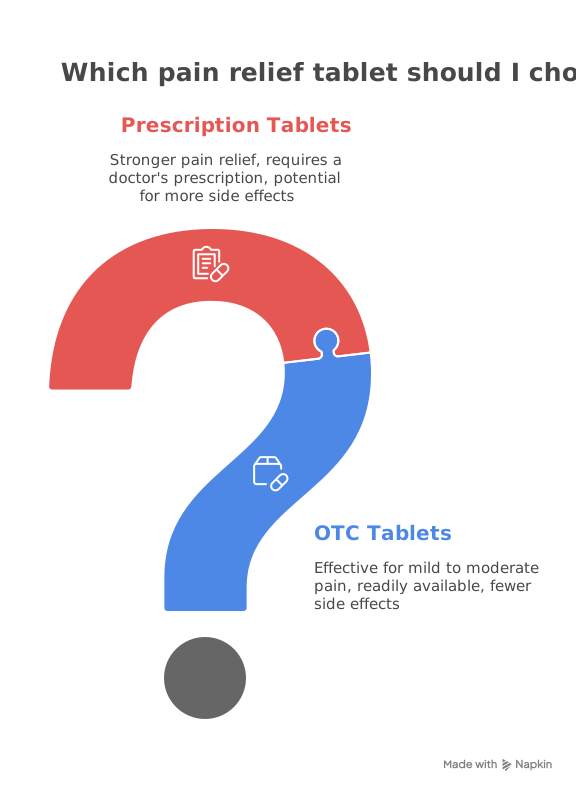
This article provides a comprehensive overview of the top 10 pain relief tablets available for adults, focusing on their effectiveness, safety, and suitability for different types of pain. We’ll delve into both over-the-counter (OTC) and prescription options, highlighting their key ingredients, potential side effects, and recommended usage. This guide aims to empower you to make informed decisions about managing your pain effectively. Qualymaa Remedies is committed to providing information that helps you lead a healthier, pain-free life.
Table of Contents
-
Introduction
-
Understanding Pain Relief Tablets
-
OTC vs Prescription Pain Relievers
-
-
Top 10 Pain Relief Tablets for Adults
3.1 Acetaminophen (Tylenol)
3.2 Ibuprofen (Advil, Motrin)
3.3 Naproxen (Aleve)
3.4 Aspirin
3.5 Combination Pain Relievers (Acetaminophen + Codeine)
3.6 Tramadol
3.7 Oxycodone
3.8 Hydrocodone
3.9 Muscle Relaxants (Cyclobenzaprine)
3.10 Topical Pain Relievers (Lidocaine Patches) -
Comparisons of Common Pain Relievers
-
Choosing the Right Pain Relief Tablet
-
Type and severity of pain
-
Medical conditions
-
Drug interactions
-
Potential side effects
-
-
Safety and Usage Guidelines
-
Role of Qualymaa Remedies in Pain Management
-
Conclusion
-
Frequently Asked Questions (FAQs)
Introduction
Pain is a common experience, affecting millions of adults worldwide. Whether it’s a throbbing headache, aching muscles, or chronic joint pain, finding effective relief is crucial for maintaining a good quality of life. Pain relief tablets offer a convenient and often effective way to manage various types of pain. However, with so many options available, choosing the right one can be overwhelming. This guide aims to simplify the process by providing a detailed overview of the top 10 pain relief tablets for adults.
Top 10 Pain Relief Tablets for Adults
Here’s a breakdown of the top 10 pain relief tablets, categorized for clarity:
1. Acetaminophen (Tylenol):
• Description: Acetaminophen is a widely used OTC pain reliever and fever reducer. It
works by reducing the production of prostaglandins in the brain, which are chemicals
that cause pain and inflammation.
• Uses: Effective for mild to moderate pain, such as headaches, muscle aches, and fever.
• Dosage: Typically 325-650mg every 4-6 hours as needed, not exceeding 4000mg per
day.
• Side Effects: Generally safe when taken as directed, but high doses can cause liver
damage.
2. Ibuprofen (Advil, Motrin):
• Description: Ibuprofen is a nonsteroidal anti-inflammatory drug (NSAID) that reduces
pain, inflammation, and fever. It works by blocking the production of prostaglandins
throughout the body.
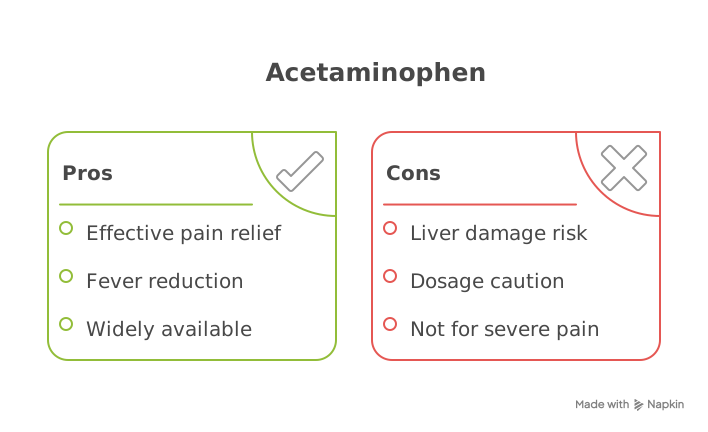
Acetaminophen
Pros Cons
Effective pain relief Liver damage risk
Fever reduction Dosage caution
Widely available Not for severe pain
• Uses: Effective for mild to moderate pain, including headaches, muscle aches,
menstrual cramps, and arthritis.
• Dosage: Typically 200-400mg every 4-6 hours as needed, not exceeding 1200mg per
day.
• Side Effects: Can cause stomach upset, heartburn, and increased risk of bleeding.
Long-term use can increase the risk of heart problems and kidney damage.
3. Naproxen (Aleve):
• Description: Naproxen is another NSAID that provides longer-lasting pain relief
compared to ibuprofen.
• Uses: Similar to ibuprofen, effective for pain, inflammation, and fever. Often used for
arthritis, menstrual cramps, and back pain.
• Dosage: Typically 220-440mg initially, followed by 220mg every 8-12 hours as needed,
not exceeding 660mg per day.
• Side Effects: Similar to ibuprofen, including stomach upset, heartburn, and increased
risk of bleeding.
4. Aspirin:
• Description: Aspirin is an NSAID that also has blood-thinning properties.
• Uses: Effective for mild to moderate pain, fever, and inflammation. Also used to
prevent heart attacks and strokes in some individuals.
• Dosage: For pain relief, typically 325-650mg every 4-6 hours as needed.
• Side Effects: Can cause stomach upset, heartburn, and increased risk of bleeding.
Should be avoided by children and teenagers due to the risk of Reye’s syndrome.
5. Combination Pain Relievers (Acetaminophen and Codeine):
• Description: These tablets combine acetaminophen with codeine, a weak opioid.
• Uses: Effective for moderate to severe pain that is not relieved by OTC pain relievers.
• Dosage: Varies depending on the specific product. Follow your doctor’s instructions
carefully.
• Side Effects: Can cause drowsiness, constipation, nausea, and respiratory depression.
Codeine is addictive and should be used with caution.
6. Tramadol:
• Description: Tramadol is a synthetic opioid analgesic.
• Uses: Used to treat moderate to moderately severe pain.
• Dosage: Typically 50-100mg every 4-6 hours as needed, not exceeding 400mg per
day.
• Side Effects: Can cause nausea, vomiting, constipation, dizziness, and drowsiness.
Tramadol can be addictive and should be used with caution.
7. Oxycodone:
• Description: Oxycodone is a strong opioid analgesic.
• Uses: Used to treat severe pain.
• Dosage: Varies depending on the specific product and the severity of pain. Follow
your doctor’s instructions carefully.
• Side Effects: Can cause drowsiness, constipation, nausea, vomiting, and respiratory
depression. Oxycodone is highly addictive and should be used with extreme caution.
8. Hydrocodone:
• Description: Hydrocodone is another strong opioid analgesic, often combined with
acetaminophen or ibuprofen.
• Uses: Used to treat moderate to severe pain.
• Dosage: Varies depending on the specific product and the severity of pain. Follow
your doctor’s instructions carefully.
• Side Effects: Similar to oxycodone, including drowsiness, constipation, nausea,
vomiting, and respiratory depression. Hydrocodone is highly addictive and should be
used with extreme caution.
9. Muscle Relaxants (Cyclobenzaprine):
• Description: Cyclobenzaprine is a muscle relaxant that helps relieve muscle spasms
and pain.
• Uses: Used to treat muscle spasms associated with acute musculoskeletal conditions.
• Dosage: Typically 5-10mg three times a day.
• Side Effects: Can cause drowsiness, dizziness, and dry mouth.
10. Topical Pain Relievers (Lidocaine Patches):
• Description: Lidocaine patches contain a local anesthetic that numbs the area where
they are applied.
• Uses: Used to relieve localized pain, such as postherpetic neuralgia (shingles pain).
• Dosage: Apply one patch to the affected area for up to 12 hours per day.
• Side Effects: Can cause skin irritation at the application site.
Selecting the appropriate pain relief tablet depends on several factors, including:
• Type and severity of pain: Mild pain may respond well to OTC options like
acetaminophen or ibuprofen, while severe pain may require prescription-strength
medications.
• Underlying medical conditions: Certain medical conditions, such as liver or kidney
disease, may limit your options.
• Other medications: Some pain relief tablets can interact with other medications you
are taking.
• Potential side effects: Consider the potential side effects of each medication and
choose the one with the lowest risk for you.
Always consult with your doctor or pharmacist before taking any new pain relief
medication. They can help you choose the safest and most effective option for your specific
needs. Qualymaa Remedies encourages you to seek professional medical advice for any
health concerns.
Qualymaa Remedies and Pain Management
Qualymaa Remedies is dedicated to providing high-quality health information and resources
to help you manage your pain effectively. While we do not manufacture or sell pain relief
tablets directly, we are committed to empowering you with the knowledge you need to
make informed decisions about your health. We believe that a holistic approach to pain
management, including lifestyle modifications, physical therapy, and appropriate
medication, is essential for achieving long-term relief.
Conclusion
Pain relief tablets can be a valuable tool for managing various types of pain. However, it’s
crucial to choose the right medication and use it